Home Air Sealing: Close the Gaps Before You Insulate
Air sealing is the work of closing the small openings that let air move between the house and the attic, basement or outdoors. It is done with foam, caulk, fire-rated sealant and rigid patches, and it comes before new insulation because insulation slows heat but does not stop moving air.
Describe the job and add your city. Free to request, no obligation.
A house leaks in more places than most owners expect. Plumbing stacks, wire holes in the top plates, recessed lights, chimney chases, the attic hatch and gaps where walls meet the attic floor all connect the living space to the roof space. Warm, damp air rises through these gaps and carries heat, and often moisture, into the attic.
That moving air is behind many ice dams and frosty roof decks. Seal the leaks and the attic stays cold and dry in winter, which also protects the insulation from getting damp. It is one of the lowest-cost changes with some of the largest effects on comfort.
What the work includes
- Walking the attic and house to find leaks, often with a smoke pencil or thermal camera
- Sealing gaps around plumbing stacks, wire holes and ductwork where they enter the attic
- Closing gaps along the top plates where interior walls meet the attic floor
- Using fire-rated materials around flues and chimneys
- Covering or boxing in recessed lights where clearance rules allow
- Weatherstripping and insulating the attic hatch
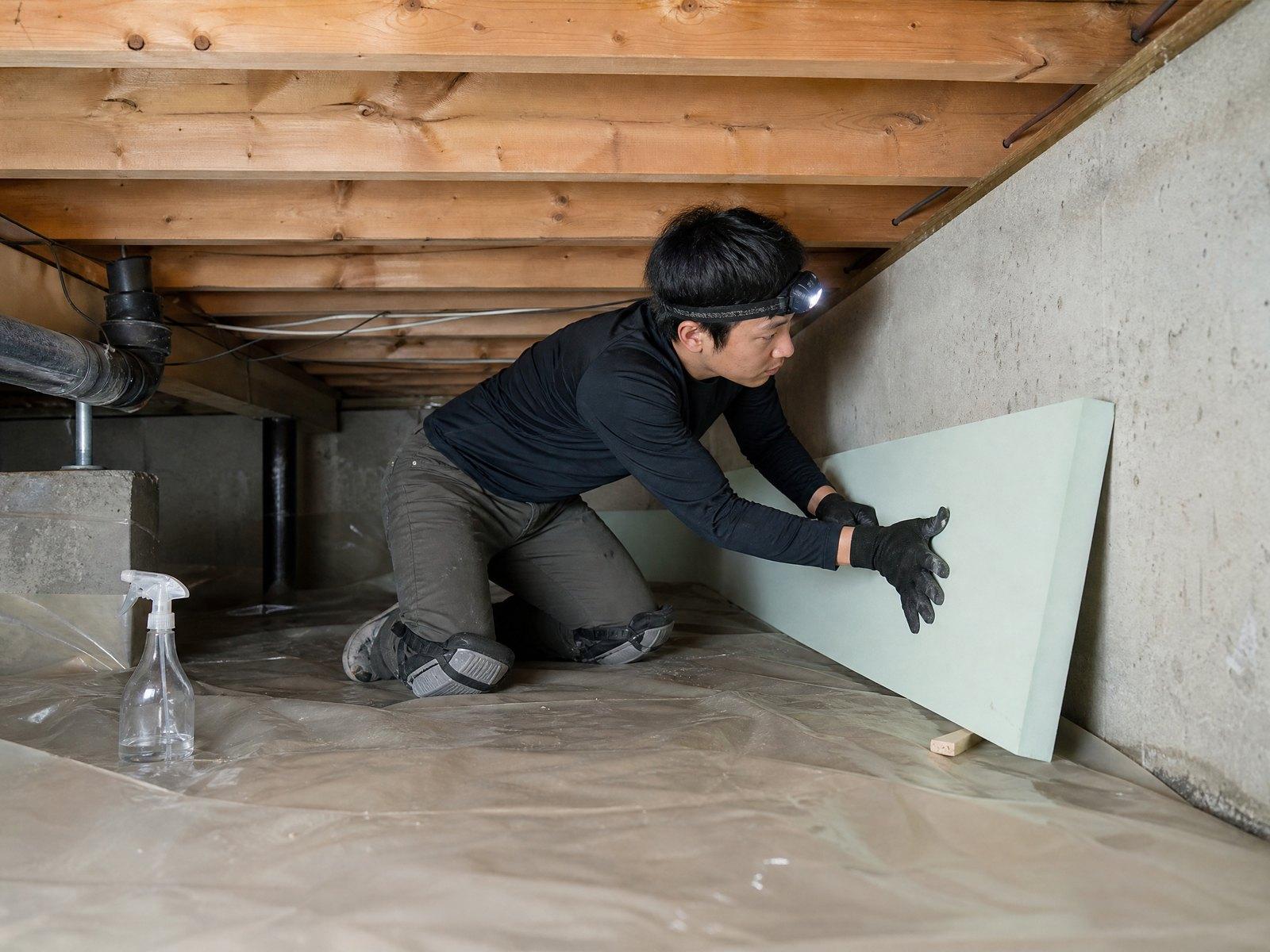
- Sealing the rim joist where the house sits on the foundation
- A blower door test before and after when your quote includes one
Signs your house is leaking air
Draughts at outlets, baseboards or around the attic hatch
Dust that returns to the same spot quickly, particularly near the attic or basement
Dark streaks on insulation near pipes, wires and lights, where air has filtered through
Frost on the underside of the roof deck on very cold mornings
Rooms that never reach the thermostat setting no matter how long the furnace runs
Smoke or incense drifting sideways near the ceiling or baseboards during a draught test
How the work goes, step by step
Describe the symptoms
Tell us about drafts, cold rooms and how the house responds when the weather turns.
Find the leaks
A local specialist inspects the attic, top plates and rim joist, and may use a blower door to locate air paths.
Plan the sealing
The biggest openings are listed first, along with how each one will be closed.
Written quote
You receive the openings to be sealed, the materials, the testing and the cleanup.
Seal, then retest
Gaps are closed, the hatch is sealed, and the test is run again if the quote included it.
What changes the price
- Size of the house
- More attic floor and more rooms below mean more openings to find and close.
- Number of penetrations
- Each wire hole, vent and pipe is another sealing point, so older, much-modified houses take longer.
- Access
- Open attic floors are fast. Finished attics, knee walls and closets full of stored items slow the work.
- Testing
- A blower door test before and after is a separate line item and takes a couple of hours.
- Combined with insulation
- Sealing is often priced as part of an insulation job and costs less in one visit than on its own.
- Fire-rated work
- Flues and chimney chases need special materials, which cost more than standard foam.
What a good quote spells out
- A list of the openings that will be sealed, not just the words air sealing
- Whether a blower door test is included before and after
- Which sealants are used near chimneys and flues
- How the attic hatch will be insulated and weatherstripped
- Warranty terms on materials and workmanship, in writing
Air Sealing: questions people ask
Is air sealing the same as insulation?
No. Insulation slows heat flow through a material, and air sealing stops air moving through gaps. A house needs both, and sealing usually comes first so the insulation can work.
Can a house be sealed too tight?
A house can become tight enough that ventilation needs a second look, especially with a gas appliance or a fireplace. A specialist checks combustion appliances and fresh air supply as part of the plan.
What is a blower door test?
A fan is fitted into an exterior door to pull air through the leaks while the specialist measures how much escapes. Running it before and after shows how much the sealing improved.
Where do most leaks hide?
In the attic floor: plumbing stacks, wire holes, recessed lights, chimney chases and the hatch. Basement rim joists are the next common place.
Will air sealing cure ice dams?
It addresses a major cause, because warm air reaching the roof deck is what melts snow. Combined with enough insulation and clear eave vents, it often solves the problem.
Other Calenta services
Cold Rooms, Drafts or Ice Dams? Get It Looked At.
Fill out the quote form with your city and what you are noticing. A local specialist follows up to look at the attic, walls and basement and give you a written quote. Free to request, no obligation.
Request a free quote →