Old Attic Insulation Removal: When It Has to Come Out
Insulation removal means vacuuming out the old attic insulation, cleaning the surface and starting fresh with air sealing and a new layer. It is done when the material is wet, packed flat, soiled by rodents or full of debris and no longer works.
Describe the job and add your city. Free to request, no obligation.
Insulation that is damp or compacted loses much of its value, and it can hide mould and droppings. Putting new insulation on top of that just seals a problem in place. A heavy vacuum with a long hose pulls the old material into bags outside the house, and the attic floor is then cleaned and sealed before the new layer goes on.
One thing needs care. Grey-brown pebbly material that looks like small stones is probably vermiculite, and some vermiculite contains asbestos. Do not disturb it, and do not store things on it. It has to be tested, and if it contains asbestos, removal belongs to a qualified abatement contractor before any insulation work begins.
What the work includes
- Checking what the old insulation is made of and how damaged it is
- Flagging possible vermiculite for testing before anything is touched
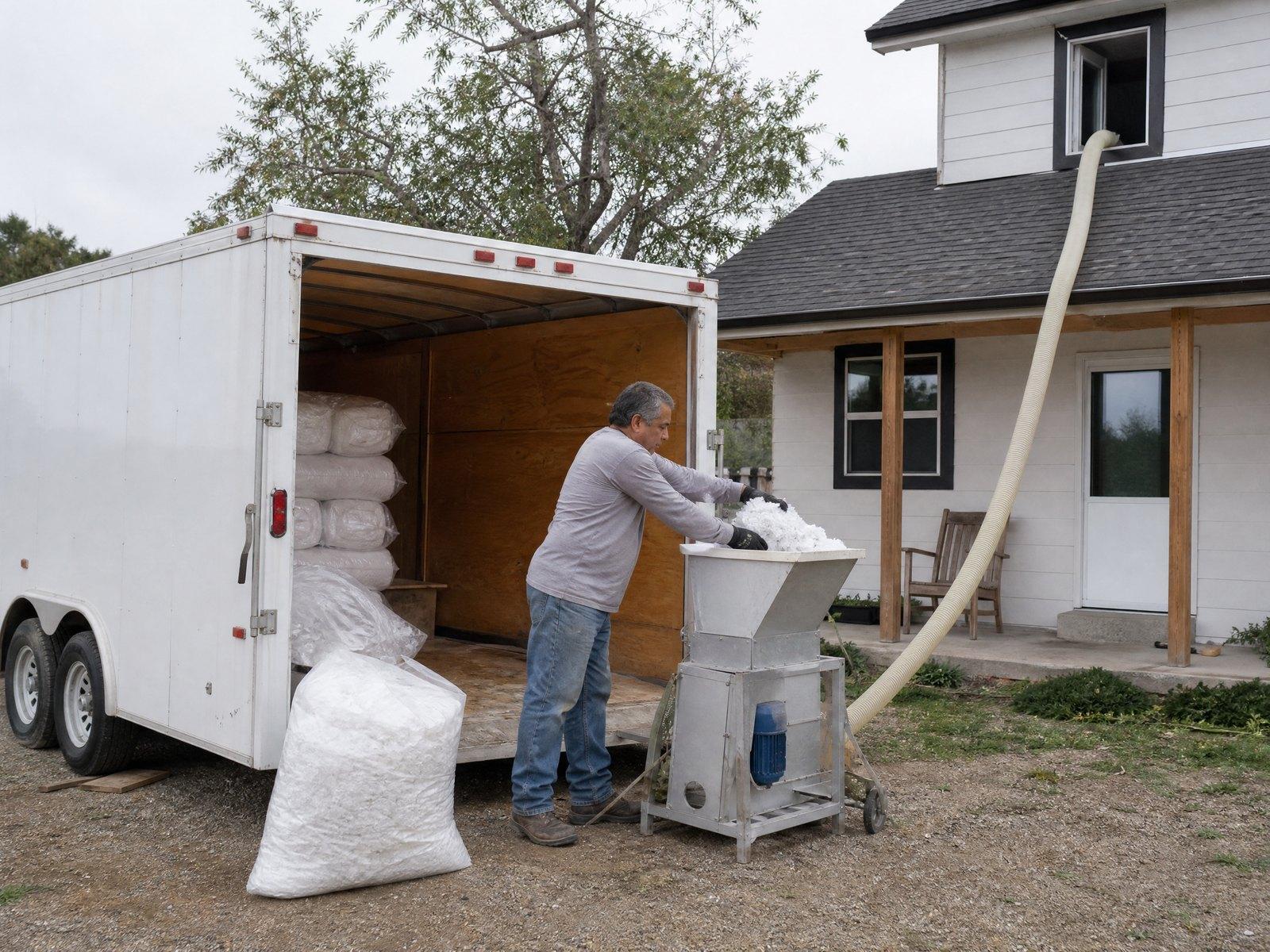
- Setting up a vacuum hose from the truck to the attic
- Bagging the old material outside and hauling it away
- Cleaning the attic floor and checking for droppings or leaks
- Sealing air leaks around the pipes, wires and hatch
- Installing new baffles at the eaves if the old ones are damaged
- Blowing in the new insulation to the agreed depth
Signs old attic insulation should come out
Insulation is dark, wet to the touch or flattened into a hard mat
A musty smell or visible mould near the roof deck or the eaves
Droppings, nests or chewed material from mice, squirrels or birds
A past roof leak has soaked the insulation underneath
Grey-brown pebbles that look like small stones, which could be vermiculite
Old paper-faced batts that are crumbling or covered in dust
How the work goes, step by step
Describe the problem
Tell us about stains, smells, pests or a past leak, and mention any pebbly material.
Inspect the attic
A local specialist looks at the layer, checks for moisture and vermiculite, and notes what needs repair.
Written quote
The quote shows removal, cleaning, air sealing, new insulation and disposal.
Vacuum out
A truck-mounted vacuum pulls the old material into bags outside the house.
Seal and re-insulate
The floor is cleaned and sealed, baffles go in and the new layer is installed.
What changes the price
- Area and depth
- A larger attic or a thicker layer means more material to vacuum and haul.
- Condition
- Soiled or mouldy insulation needs extra protective gear and more careful handling.
- Type of material
- Loose-fill goes quickly by vacuum. Stapled batts take more time to remove by hand.
- Access
- A small hatch and long hose runs slow the job.
- Disposal
- Fees for hauling and dumping vary by municipality.
- Hazardous material
- Anything that tests positive for asbestos is a specialist job at a much higher cost.
What a good quote spells out
- Whether suspected vermiculite is tested before work and who handles it
- How dust and debris are contained inside the house
- What is done about droppings and cleaning in the attic
- Whether air sealing and new insulation are in the same quote
- Warranty terms on the new layer, in writing
Old Insulation Removal: questions people ask
How can you tell if the attic has vermiculite?
It looks like loose grey-brown pebbles with a shiny, layered texture. Do not touch it. Have a sample tested and wait for the result before any work in the attic.
Can the old insulation just stay and get covered?
Only if it is dry, clean and sound. Wet, soiled or compacted material should come out, because new insulation does not fix what lies beneath it.
Is the removal messy?
The material goes through a hose to bags outside, so the house stays much cleaner than you might expect. Floors along the route are covered.
Can rodent droppings be cleaned up?
Yes, the surface is cleaned and treated as part of the job when the quote includes it. Closing the entry points is usually a separate step.
Does removal always need new air sealing?
It is the best time for it. With the attic floor clear, every gap around pipes, wires and the hatch is easy to reach and seal.
Other Calenta services
Cold Rooms, Drafts or Ice Dams? Get It Looked At.
Fill out the quote form with your city and what you are noticing. A local specialist follows up to look at the attic, walls and basement and give you a written quote. Free to request, no obligation.
Request a free quote →